Sleep · Habits
7 Reasons You Wake Up at 3 A.M. Every Night (Number 5 Is Sitting in Your Evening Glass)
You fall asleep fine. Then your eyes open at the same hour, night after night. It's rarely a mystery: it's usually seven ordinary habits, and each one has a change you can try tonight.
By the Nightjar Sleep School team · 4 min read

If you fall asleep without much trouble but wake at the same hour every night, this is for you.
You know the routine. Your eyes open, the room is dark, and you already know what the clock will say before you look. Three-something. Again.
You lie there. You look anyway. You start doing the math on how many hours are left. By the time you drift off, the alarm is close.
Here's the good news: waking at the same hour night after night usually has ordinary causes. We call it the 3 a.m. rebound: the second half of the night is lighter by nature, and a few everyday habits make it light enough to wake you.
Quick self-test. Count how many are true for you: coffee after noon · a warm bedroom · screens in bed · a different wake-up time on weekends · a drink in the evening · lying awake trying harder · checking the clock. Two or more? Keep reading.
1. Your last coffee is still working
Caffeine stays in the body for hours after the cup is empty, and some people clear it much more slowly than others. An afternoon coffee can still be in your system at bedtime, and lighter, broken sleep in the small hours is one way it shows up.
Try this tonight: make your last caffeine of the day before noon for two weeks. That includes tea, cola and chocolate.
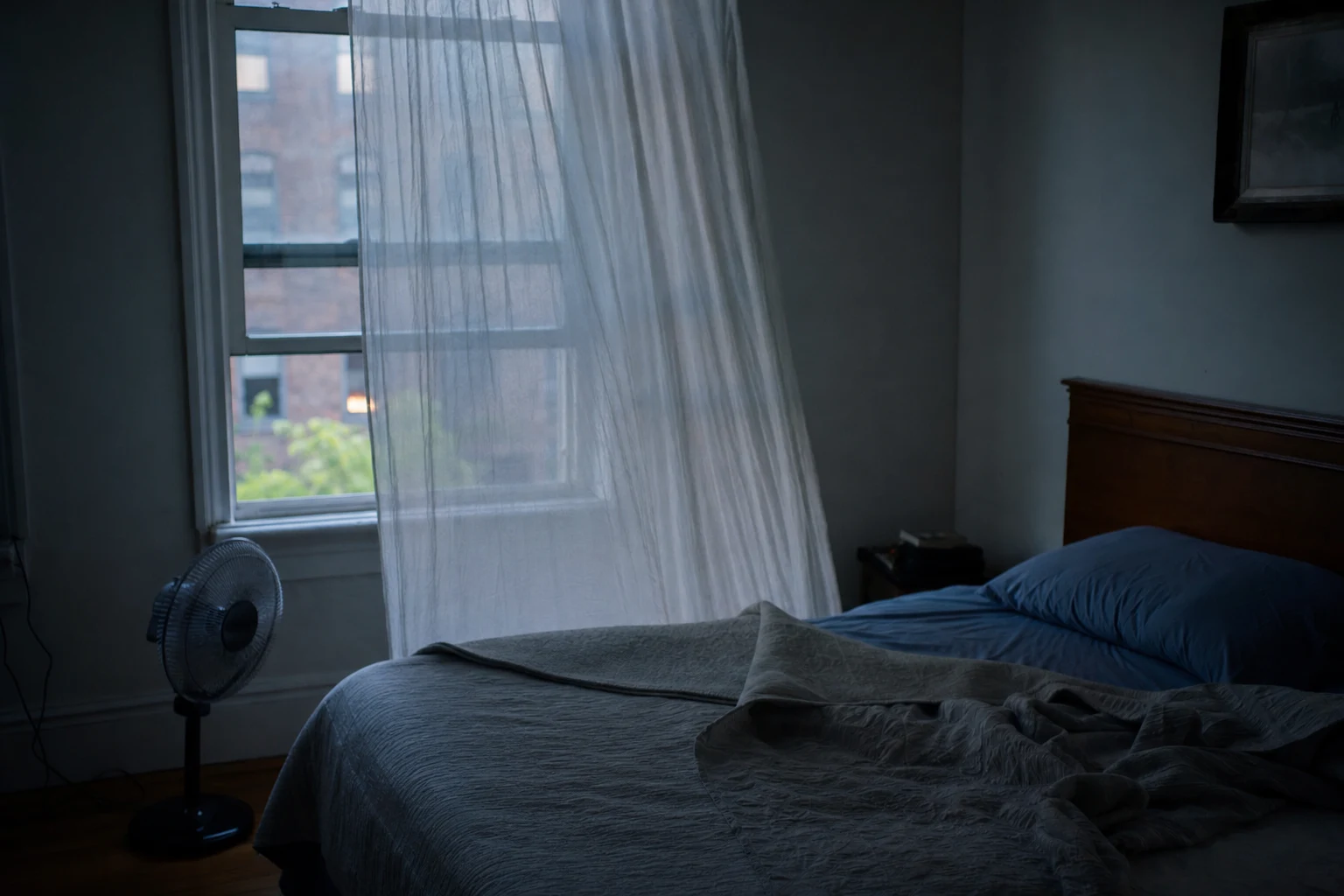
2. Your bedroom is too warm
Your body temperature drops at night as part of sleeping. A warm room, a heavy duvet or a warm partner works against that drop, and the second half of the night is when it tends to wake you.
Try this tonight: open a window a crack or turn the heating down an hour before bed. Swap the heavy duvet for a lighter one.
3. Bright light late, dim light early
Your body clock sets itself by light. Bright screens late in the evening tell it the day isn't over. A dark, slow morning tells it the day hasn't started. Both push sleep later and make it lighter.
Try this tonight: dim the lights in the last hour and keep the phone out of the bedroom. Tomorrow, get outside light within an hour of waking.
4. A wake-up time that moves
Sleeping in on Saturday feels like catching up. To your body clock, it's like flying one time zone west and back every weekend.
Try this tonight: set one wake-up time for all seven days, weekends included, and keep it even after a bad night.
5. The evening glass
This is the one that surprises people. A drink in the evening can make it easier to fall asleep. But as the body works through the alcohol, sleep in the second half of the night tends to get lighter and more broken. That's exactly when the 3 a.m. waking happens.
Try this tonight: two weeks with no alcohol in the three hours before bed. Then watch what the small hours do.

6. Lying in bed awake, trying harder
When you lie awake for an hour, your brain learns that bed is a place for being awake. Trying harder makes it worse, because effort is the opposite of sleep.
Try this tonight: if you've been awake for what feels like twenty minutes, get up. Sit somewhere dim and do something dull until you feel sleepy, then go back.
7. Checking the clock
The moment you look, you start counting: four hours left, three and a half. The counting wakes you up further.
Try this tonight: turn the clock to face the wall. Leave the phone in another room.
Why a pill doesn't fix the pattern
Many people reach for melatonin or a sleeping aid first. Melatonin is a timing signal, not a knock-out drop, and a sleeping aid can make the first half of the night easier. Neither changes the seven habits above, so the 3 a.m. rebound is still waiting. (Ask your doctor about any medication; this isn't a reason to stop one.)
The habits are the part you control. The trouble is changing all seven at once, which is how most people give up by Wednesday.
The order matters more than the trick
Fix the body clock first, the wake-up time and the morning light, because everything else sits on top of it. Then the room. Then the evening. Then the plan for the night you still wake up.
| Week | What changes | Why it comes here |
|---|---|---|
| 1 | One wake-up time, morning light | Sets the clock everything else depends on |
| 2 | The room, the screens, caffeine, the evening glass | Takes away what lightens the second half of the night |
| 3 | The 3 a.m. plan: get up, stay dim, no clock | For the nights you still wake |
That order is what the Nightjar Sleep School built the 3 A.M. Reset around: 21 nights, one short audio each evening with the one change for that night, and what to do if you wake.

You can start with the seven changes above on your own tonight. If you'd rather take them one at a time, in the order that holds, see how the 3 A.M. Reset works.
General information about sleep habits, not medical advice. If you snore loudly, stop breathing in your sleep, or wake up tired for weeks whatever you change, talk to a doctor.